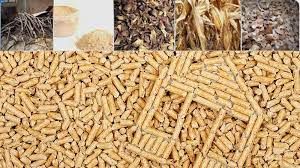
Malaysia PKS Pellet: Co-Fire Supply Chain
Kingwood · August 3, 2026
Malaysia: The World’s PKS Pellet Capital
Malaysia’s biomass pellet export industry is structurally distinct from every other major Southeast Asian producer because it is anchored by palm kernel shell (PKS) — the woody byproduct of palm oil processing — rather than plantation timber. Annual PKS pellet exports run approximately 250,000–350,000 metric tons, with Japan absorbing roughly 70% under FIT-qualified co-firing supply contracts.
For pellet producers and equipment suppliers evaluating Southeast Asian capacity, Malaysia offers a fundamentally different value proposition: lowest-cost feedstock per ton (palm oil industry waste stream), established palm sector logistics, and direct positioning for the Japanese co-firing demand channel that accepts higher-ash biomass fuel.
Understanding PKS: From Palm Oil Waste to Co-Firing Fuel
Palm kernel shell is the thin, woody shell surrounding the palm kernel — the seed inside the palm fruit. Palm oil extraction generates roughly 5.5% of fresh fruit bunch (FFB) mass as PKS — a structural byproduct stream that scales directly with palm oil production volume.
Pre-pelletizing, PKS is a loose granular material with variable particle size and moderate moisture content. PKS pelletizing performs three functions:
- Densification — increases bulk density from 400 kg/m³ loose to 700+ kg/m³ pelleted, improving shipping and storage economics
- Uniformity — produces consistent particle size for industrial boiler combustion
- Moisture stabilization — reduces to consistent ≤12% moisture for stable combustion
PKS pellets deliver calorific value of 4,000–4,200 kcal/kg with ash content of 5–8% — lower energy density and higher ash than premium wood pellets, but with very low feedstock cost since PKS is a palm oil industry waste stream.
Why Malaysia Is PKS-Dominant
Three structural factors anchor Malaysia’s PKS specialization:
Palm oil scale. Malaysia operates approximately 5.7 million hectares of oil palm plantation — the world’s second-largest after Indonesia. Combined palm oil and PKS production from this base supports sustained pellet feedstock supply across the major palm oil regions (Selangor, Johor, Sabah, Sarawak).
Limited forest plantation alternative. Unlike Vietnam (acacia expansion), Indonesia (1.4 million ha forest plantation), or Thailand (rubberwood), Malaysia has limited industrial forest plantation area. The economic incentive points toward leveraging existing palm sector feedstock rather than developing parallel forest plantation supply.
Established palm sector logistics. Port Klang, Pasir Gudang, and Lahad Datu Ports are integrated with palm oil export infrastructure — bulk handling, storage, and shipping capabilities adapted from palm oil and palm kernel oil flows are directly applicable to PKS pellet exports.
The Japanese FIT Co-Firing Demand Channel
Japan absorbs approximately 70% of Malaysian PKS pellet exports — roughly 200,000 tons annually — channeled through FIT-qualified biomass co-firing supply contracts:
| Buyer Type | Demand Profile | PKS Acceptance |
|---|---|---|
| Dedicated biomass FIT plants | Higher specification preference, lower PKS share | Limited |
| Coal co-firing FIT facilities | Existing ash handling, higher PKS tolerance | Strong |
| Industrial process heat | Variable specification, opportunistic PKS use | Moderate |
| Korea KEPCO co-firing | KFQC-tier acceptance, tightening since 2023 | Decreasing |
Japanese coal co-firing facilities are the structural anchor of Malaysian PKS demand. These facilities — many converted from pure coal under Japan’s renewable energy targets — already operate ash handling infrastructure that comfortably accommodates 5–8% ash biomass fuel. The economic case for PKS at these facilities is fuel cost: PKS pellets at $85–$115/ton FOB Port Klang versus premium wood pellets at $135–$170/ton FOB Vietnam/Indonesia.
Korean KFQC Tightening: Strategic Implications for Malaysian Producers
Korean KFQC policy revisions since 2023 have progressively tightened PKS eligibility for premium RPS compliance contracts, particularly for newer KEPCO subsidiary off-take. This has shifted demand:
Pre-2023: Korean KFQC accepted PKS pellets at industrial co-firing tier, with about 25% of Malaysian PKS exports flowing to Korean utilities.
2024–2026: Korean PKS demand has compressed to roughly 20% of Malaysian exports, with Japanese FIT co-firing buyers absorbing the demand slack at modestly favorable pricing.
Forward outlook: Continued Korean tightening expected, partially offset by Japanese co-firing capacity additions through 2030. Malaysian producers respond through diversification strategies: adding wood pellet capacity alongside PKS lines (where forest plantation access permits), pivoting toward Japanese-only export channels with longer-term co-firing contract security, or entering domestic Malaysian biomass power generation markets under the Sustainable Energy Development Authority (SEDA) feed-in tariff framework.
Production Capacity Implications: PKS vs Wood Lines
For pellet producers and equipment suppliers thinking about Malaysian capacity, the key engineering decision is between PKS-specialized lines and flexible PKS/wood-capable lines:
PKS-specialized lines (2–8 t/h). Optimized for palm sector feedstock, lower capital cost per ton output. Limited flexibility if PKS demand compresses further or premium-tier buyers shift away. Best for producers with direct palm oil mill relationships and concentrated PKS supply.
Flexible PKS/wood lines (6–15 t/h). Higher capital cost but capable of switching between PKS and wood-only feedstock depending on market conditions. Kingwood’s wet-feed line architecture handles both feedstock types through the same crushing and drying sequence, with screen, die, and cooling configurations adjustable for output specification.
Wood-focused lines with PKS supplement (8–24 t/h). Best for producers with mixed access to palm sector and emerging forest plantation. Higher entry barrier given forest plantation availability constraints in Malaysia, but highest margin tier if executed successfully.
Kingwood’s Southeast Asian footprint is operational, not aspirational: Malaysia is among the 30+ countries with active Kingwood projects (2026 project map), and the nearest large-scale reference is a 200,000 t/year branch-wood pellet line delivered in Indonesia — a full crushing–grinding–drying–pelleting–packaging train in the same equatorial Southeast Asian operating environment. Vietnam adds the 12 t/h wood pellet line with 23-month payback (2024), a 24 t/h line (2023), and a 100,000 t/year bamboo-and-wood-chip line; Thailand a multi-machine integrated line. The wet-feed architecture is particularly well-suited to PKS processing given the natural moisture variability of palm sector feedstock streams.
FOB Pricing and Co-Firing Buyer Economics
Industrial-grade FOB Port Klang to Japan pricing has settled at $85–$115/ton for PKS pellets in 2024–2026, with premium specifications (ash under 6%, FSC-certified mill supply) commanding $10–$15/ton premium. Wood pellet exports trade at $130–$160/ton FOB, comparable to Indonesian wood pellet pricing.
For Japanese co-firing buyers, the economic calculus is:
- PKS pellets at $90–$110/ton FOB delivered: 4,000 kcal/kg → ~$0.022/kcal energy cost
- Wood pellets at $145–$165/ton FOB delivered: 4,500 kcal/kg → ~$0.033/kcal energy cost
PKS delivers approximately 30% lower energy cost per kcal — the structural margin that keeps the Japanese co-firing demand channel strong despite higher ash management requirements.
Kingwood’s complete wet-feed wood pellet production line configurations are engineered for flexible feedstock processing — supporting both PKS pellets and wood pellets across the Malaysian and broader Southeast Asian export channels, with full-scope engineering services covering consultation, line design, equipment manufacture, logistics, installation, commissioning, operator training, and ongoing after-sales support across all 30+ countries served.
Related: Asia-Europe Wood Pellet Supply Chain Series
This article is part of the Kingwood Wood Pellet Market Series — global biomass pellet trade flow analysis covering supply, demand, certification, and pricing dynamics:
FAQ
What is palm kernel shell (PKS) and why is it used for pellets?
Palm kernel shell (PKS) is the woody outer shell of the palm fruit kernel, separated during palm oil extraction. It is a high-density, low-moisture biomass byproduct with calorific value of 4,000–4,200 kcal/kg — slightly lower than wood pellets but with very low feedstock cost since it is a palm oil industry waste stream. PKS pelletizing converts this loose byproduct into uniform fuel pellets suitable for industrial co-firing in coal power plants and biomass boilers.
How much PKS pellet does Malaysia export each year?
Malaysia exports approximately 250,000–350,000 metric tons of PKS pellets annually as of 2024–2026, with volumes growing roughly 8–12% per year driven primarily by Japanese FIT-qualified co-firing demand. Malaysia is the world's second-largest palm oil producer (after Indonesia), with structural PKS feedstock supply supporting capacity expansion. Total Malaysian biomass pellet output including wood pellets is roughly 400,000–500,000 tons annually.
Why is Malaysia's pellet industry PKS-dominant vs wood-dominant?
Malaysia has limited industrial forest plantation area compared to Vietnam (acacia expansion), Indonesia (1.4M ha plantation), or Thailand (rubberwood). Palm oil is the dominant agricultural sector — 5.7 million hectares of oil palm plantation versus less than 1 million ha of industrial forest. This structural feedstock availability makes PKS the lowest-cost biomass input, and the established palm oil supply chain provides built-in port logistics, processing infrastructure, and operator expertise.
Which countries buy Malaysian PKS pellets?
Japan is the dominant buyer at approximately 70% of Malaysian PKS pellet exports, channeled through FIT-qualified biomass co-firing supply contracts. South Korea takes about 20% under KFQC co-firing tier acceptance — though Korean policy revisions since 2023 have progressively tightened PKS eligibility for premium RPS compliance. China domestic and EU spot markets share smaller volumes. Vietnam and Indonesia compete for similar buyer demand but with different feedstock profiles.
What ports handle Malaysian PKS pellet exports?
Port Klang (Selangor, west coast Peninsular Malaysia) handles the largest share of PKS pellet exports, leveraging proximity to Selangor and Negeri Sembilan palm oil mills. Pasir Gudang Port (Johor) handles southern Peninsular volumes including Singapore-region origin cargoes. Lahad Datu Port in Sabah handles East Malaysian (Borneo) volumes. All major ports support 6,000–15,000 DWT bulk vessel loading for Japan and Korea destinations.
What is the calorific value and ash content of PKS pellets vs wood pellets?
PKS pellets typically deliver calorific value of 4,000–4,200 kcal/kg with ash content of 5–8%. Wood pellets (acacia, eucalyptus, rubberwood) typically deliver 4,300–4,800 kcal/kg with ash content of 1–3%. PKS pellets carry higher density (often 700+ kg/m³ versus 600–650 for wood) but the lower energy per ton means industrial buyers price PKS at a $40–$60/ton discount to premium wood pellets. PKS is best suited to co-firing facilities with higher ash tolerance and existing ash handling infrastructure.
What are typical Malaysia PKS pellet FOB prices in 2026?
FOB Port Klang to Japan pricing has ranged $85–$115/ton for industrial-grade PKS pellets in 2024–2026, with premium specifications (ash under 6%, FSC-certified mill supply) commanding $10–$15/ton over baseline. Wood pellet exports (where Malaysian capacity exists) trade at premium tier prices $130–$160/ton FOB, comparable to Indonesian wood pellet pricing. The wide spread between PKS and wood pellet pricing reflects the structural energy density and ash management differences.
How is Korean KFQC policy affecting Malaysian PKS demand?
Korean KFQC policy revisions since 2023 have progressively tightened PKS eligibility for premium RPS compliance contracts — particularly for newer KEPCO subsidiary off-take. This has compressed Korean demand for Malaysian PKS pellets versus pre-2023 volumes, with Japanese FIT co-firing buyers taking up the demand slack. Malaysian producers are responding through diversification — adding wood pellet capacity alongside PKS lines, or pivoting toward Japanese-only export channels with longer-term co-firing contract security.
- Malaysia exported approximately 290,000 metric tons of palm kernel shell (PKS) pellets in 2024, with Japan absorbing roughly 200,000 tons under FIT-qualified co-firing supply contracts. (2024, Malaysia External Trade Statistics (MATRADE) — Biomass Fuel Exports 2024)
- Malaysia operates approximately 5.7 million hectares of oil palm plantation as of 2024 — the world's second-largest palm oil production base after Indonesia — providing structural feedstock supply for sustained PKS pellet industry growth. (2024, Malaysian Palm Oil Board (MPOB) — Plantation Area Statistics 2024)
- PKS pellets typically command a $40–$60/ton discount to premium wood pellets at FOB Asian export ports, reflecting calorific value differences (4,000–4,200 vs 4,300–4,800 kcal/kg) and ash content management requirements (5–8% vs 1–3%). (2024, Asian Biomass Trade Council — Comparative Pricing Survey 2024)