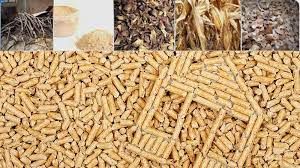
Thailand Pellets: Domestic vs Export Path
Kingwood · June 28, 2026
Thailand: A Domestic-Consumption-Dominated Pellet Market
Thailand’s biomass pellet market is structurally distinct from Vietnam, Indonesia, and Malaysia — the other major Southeast Asian producers. Annual pellet production sits at approximately 400,000 metric tons, but the unusual feature is that roughly 60% is consumed domestically by Small Power Producer (SPP) and Very Small Power Producer (VSPP) biomass generation facilities, with only 40% — about 150,000 tons annually — exporting to Korea, Japan, and smaller Asian markets.
This domestic vs export split is unique among major Southeast Asian pellet producers and creates a different commercial dynamic. For equipment suppliers and capacity planners, understanding the Thai SPP/VSPP framework is the difference between a profitable Thai project and a misfit one.
The SPP/VSPP Domestic Demand Framework
Thailand’s Adder/FiT renewable energy framework — introduced 2007 and revised multiple times since — provides feed-in tariff support for biomass power generation in two capacity tiers:
| Tier | Capacity Range | Tariff Support |
|---|---|---|
| VSPP (Very Small Power Producer) | <10 MW | Higher per-kWh adder, simpler licensing |
| SPP (Small Power Producer) | 10–90 MW | Lower per-kWh adder, complex licensing |
| IPP (Independent Power Producer) | >90 MW | Coal/gas dominant, biomass minimal |
The Energy Regulatory Commission of Thailand (ERC) regulates over 200 SPP and VSPP biomass facilities operating under this framework as of 2024. These plants consume approximately 250,000 tons of pellet fuel annually — driving structural domestic demand that supports producer margins above pure-export markets.
This is the opposite of Vietnam and Indonesia, where 95%+ of pellet output exports and domestic demand is negligible. Thailand’s domestic-first orientation means producers can structure operations around either domestic supply (lower scale, broader specifications) or export (higher scale, premium specifications), rather than being forced into the export-only commercial path.
Rubberwood: The Dominant Feedstock
Thailand’s pellet feedstock supply is anchored by Hevea brasiliensis (rubberwood) plantation residue — leveraging the country’s 3.5 million hectares of rubber plantation area, the world’s largest. Rubberwood enters the pellet supply chain through three pathways:
Plantation thinning and replanting. Rubber trees reach commercial latex productivity peak at 15–25 years, then enter a replanting cycle. End-of-cycle timber provides high-volume pellet feedstock concentrated in Southern Thailand (Songkhla, Surat Thani provinces).
Sawmill bark and offcuts. Thailand’s rubberwood furniture industry generates substantial sawmill residue — bark, end-cuts, sawdust — particularly in the Central Plains and Eastern regions. This residue commands a near-zero feedstock cost, supporting Thai pellet margin.
Plantation maintenance pruning. Annual pruning operations generate distributed feedstock streams primarily processed by local SPP/VSPP supply chains.
Eucalyptus and rice husk form secondary streams. Eucalyptus pelletizing has expanded since 2020, particularly in Northeastern Thailand (Isan region). Rice husk pelletizing serves niche rural and small-industrial markets, with Central Plains rice belt providing concentrated feedstock supply.
The Export Path: Laem Chabang to Korea
For Thai producers targeting export markets, the channel is well-established:
Laem Chabang Port (Chonburi, east of Bangkok) handles the majority of export volumes, supporting 8,000–20,000 DWT bulk vessel loading for Korea (Incheon, Donghae) and Japan (Sendai, Kobe) destinations. Shipping distance to Western Japan is competitive with Vietnamese Hai Phong Port.
Bangkok Port handles smaller volumes including spot cargoes and feedstock supply to Bangkok-region industrial buyers.
Songkhla Port in southern Thailand handles rubberwood pellet exports with direct proximity to plantation supply, particularly for Korean utility off-take seeking Sumatra-Belawan alternatives.
Korean buyers take approximately 50% of Thai exports (roughly 80,000 tons/year), Japan about 30%, with the remainder distributed across Taiwan, China domestic, and EU spot.
Production Capacity Implications: Two Strategic Paths
For pellet producers and equipment suppliers considering Thai capacity, the strategic decision is between two distinct paths:
Domestic-focused path (1–4 t/h lines). Targets SPP/VSPP biomass generation contracts under Adder/FiT framework. Broader feedstock specifications (moisture ≤15%, ash up to 8%) reduce production cost. No certification investment required (no KFQC/FSC for domestic supply). Margin profile is lower per-ton but with higher contract security under government-supported tariff payments.
Export-focused path (4–12 t/h lines). Targets Korean KEPCO subsidiary RPS-compliance off-take and Japanese FIT utilities. Requires KFQC certification (6–12 months) and FSC chain-of-custody (4–8 months). Premium specifications limit feedstock blending. Margin profile is higher per-ton with multi-year contract commitments.
Hybrid path (6–8 t/h lines with flexible specification). Some Thai producers operate at the boundary between paths, serving both premium export channels and lower-tier domestic SPP/VSPP backlogs as market conditions warrant.
Kingwood’s reference installations across capacity tiers — including the Vietnam 12 t/h line with documented 23-month payback (2024) and Vietnam 24 t/h line (2023) — provide direct templates for Thai export-path capacity sizing.
FOB Pricing and Domestic Demand Benchmarks
Industrial-grade FOB Laem Chabang to Korea pricing has settled at $130–$165/ton in 2024–2026. Domestic SPP/VSPP buyer prices have run $115–$150/ton FOB-equivalent — occasionally trading above export FOB during periods of tight domestic supply.
| Channel | Price Range | Specification | Volume Commitment |
|---|---|---|---|
| Domestic SPP/VSPP | $115–$150/ton equivalent | Moisture ≤15%, ash up to 8% | 12–24 month contracts |
| Korea KFQC export | $130–$165/ton FOB | Moisture ≤10%, ash ≤3% | 12–36 month contracts |
| Japan FIT export | $135–$170/ton FOB | Moisture ≤15%, ash facility-specific | 24+ month contracts |
| Spot market | $110–$155/ton FOB | Variable | Single-shipment |
For Thai producers, the question is rarely “domestic or export” — it is “which mix of channels maximizes blended margin given current feedstock cost and certification status.” Kingwood’s complete wet-feed wood pellet production line configurations are engineered to support flexible specification production across both Thai domestic and export channels, with full-scope engineering services covering consultation, line design, equipment manufacture, logistics, installation, commissioning, and after-sales support across all 30+ countries served.
Related: Asia-Europe Wood Pellet Supply Chain Series
This article is part of the Kingwood Wood Pellet Market Series — global biomass pellet trade flow analysis covering supply, demand, certification, and pricing dynamics:
FAQ
How big is Thailand's biomass pellet market?
Thailand produces approximately 350,000–450,000 metric tons of biomass and wood pellets annually as of 2024–2026 — substantially smaller than Vietnam (5M tons) or Indonesia (1.2M tons). What makes Thailand structurally distinct is that roughly 60% of production is consumed domestically by SPP and VSPP biomass power generation facilities, with only 40% exported. This domestic vs export split is unique among major Southeast Asian pellet producers.
Why does Thailand consume so much pellet domestically vs exporting?
Thailand's Adder/FiT framework — introduced 2007, revised multiple times — provides feed-in tariff support for biomass power generation up to 90 MW capacity (VSPP threshold) and from 10 MW to 90 MW (SPP threshold). This created a large fleet of domestic biomass generation facilities (over 200 SPP/VSPP plants operating as of 2024) requiring local pellet supply. Domestic pellet prices have historically run competitive with or above export prices, anchoring producer incentive to serve local utilities.
What feedstock do Thai pellet producers use?
Rubberwood (Hevea brasiliensis) plantation residue is the dominant feedstock — leveraging Thailand's 3.5 million hectares of rubber plantation area, with bark, branches, and end-of-cycle replanting timber feeding pellet lines. Eucalyptus plantation timber forms a secondary stream. Rice husk pelletizing serves niche rural and small-industrial markets, with the Central Plains rice belt providing concentrated feedstock supply. Mixed-biomass blends are common given diverse domestic SPP/VSPP buyer specifications.
Which countries buy Thai biomass pellet exports?
South Korea is the largest export destination at approximately 50% of Thai pellet exports, channeled through KFQC certification for RPS-compliance utility procurement. Japan takes about 30% under FIT-qualified biomass supply, with Thai exports particularly competitive for Western Japan utility off-take given shipping distance advantage. Taiwan, China domestic, and EU spot markets share the remaining 20%.
What ports handle Thai biomass pellet exports?
Laem Chabang Port (Chonburi province, east of Bangkok) handles the largest share of Thai pellet exports, supporting 8,000–20,000 DWT bulk vessel loading. Bangkok Port handles smaller volumes including spot cargoes. Songkhla Port in southern Thailand handles southern-region rubberwood pellet exports with proximity to plantation supply. Port congestion is less acute than at Vietnamese ports due to lower volumes.
What are typical Thai biomass pellet FOB prices in 2026?
Industrial-grade FOB Laem Chabang to Korea pricing has ranged $130–$165/ton in 2024–2026 for KFQC-eligible wood pellets. Domestic Thai prices have run $115–$150/ton FOB equivalent, occasionally trading above export FOB given SPP/VSPP demand. Rubberwood pellet pricing carries a $5–$10 discount to acacia-based equivalents due to historical buyer preferences, though specification testing shows comparable combustion performance.
What pellet specifications does Thailand's SPP/VSPP domestic market require?
Thai SPP and VSPP biomass facilities accept broader feedstock specifications than Korean KFQC or Japan FIT export markets — moisture typically ≤15%, ash up to 8% (industrial co-firing tier), calorific value ≥3,800 kcal/kg, sulfur ≤0.5%. This broader acceptance range supports domestic absorption of rubberwood and mixed-biomass pellets that would not qualify for premium Korean utility off-take. The trade-off is lower price point relative to export-grade product.
Can Thai producers expand into Korean utility off-take?
Yes, but requires capacity scale-up and certification investment. Most existing Thai pellet capacity sits at 1–4 t/h per line, sized for domestic SPP/VSPP supply. Korean KEPCO subsidiary off-take typically requires 30,000–100,000 t/year minimum commitment — corresponding to 4–12 t/h continuous production. Capacity expansion combined with KFQC certification (6–12 months lead time) and FSC chain-of-custody opens the higher-margin Korean export channel without requiring abandonment of domestic supply.
- Thailand produced approximately 410,000 metric tons of biomass and wood pellets in 2024, with roughly 60% consumed domestically by SPP and VSPP biomass power generation facilities — making Thailand the largest domestic-consumption-dominated pellet market in Southeast Asia. (2024, Thailand Department of Alternative Energy Development and Efficiency (DEDE) — Annual Biomass Statistics 2024)
- Thailand operates over 200 SPP and VSPP biomass power generation facilities under the Adder/FiT framework as of 2024, requiring sustained domestic pellet supply totaling approximately 250,000 metric tons annually. (2024, Energy Regulatory Commission of Thailand (ERC) — SPP/VSPP Operational Registry 2024)
- South Korea imported approximately 80,000 metric tons of Thai biomass pellets in 2024 under KFQC-certified RPS compliance contracts — making Korea the dominant single destination for Thai pellet exports. (2024, Korea Customs Service / Thailand Customs Department — Bilateral Trade Statistics 2024)